How shoppers ask AI for gifts and why products get skipped
and what your listings are missing
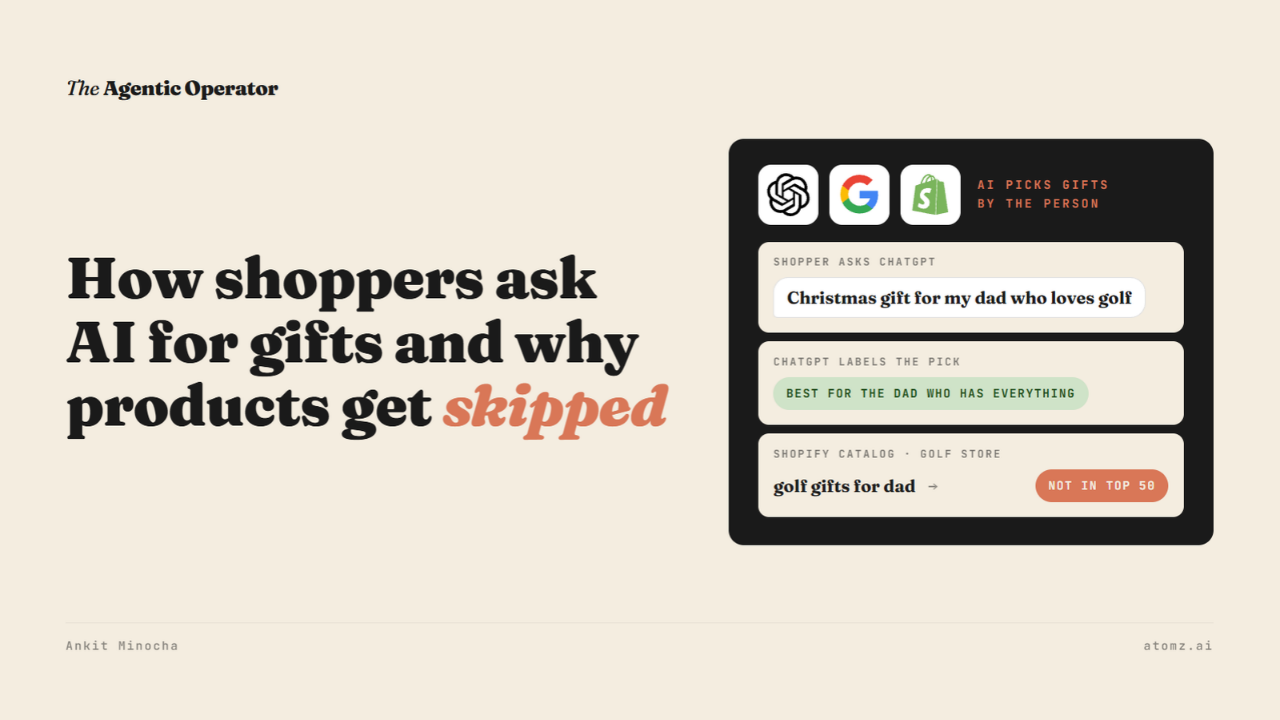
Black Friday is right around the corner, November 27. When shoppers search for a gift, they start with the person getting it.
I pulled 516 search suggestions shoppers see when they type "gifts for" into Amazon. 84% name who the gift is for, like a mom, a teen girl or a coworker. Only 2% name a price.

Source: Amazon search suggestions (US)
Everyday searches look different. In the shopper data I pulled across 75 categories, 18% of top searches name who the product is for.
A few weeks back I shared how shoppers search before they buy. For dresses, 40% of searches named who the dress was for.
What AI does with a gift question
I asked ChatGPT "christmas gift for my dad who loves golf, under $100".
It gave five picks, each with a label like "Best sentimental gift" or "Best for the dad who has everything". The line under each pick was about him too, like "Great for a dad who enjoys improving his game".

Source: ChatGPT
Then it asked more questions. It wanted to know how serious my dad is about golf and what kind of gift he'd like. It also asked how much I want to spend.

Source: ChatGPT
I asked Google's AI Mode for a Christmas gift for a coworker under $25. Each pick came with a line on who it suits, like "Pure comedic relief for the office".

Source: Google AI Mode
One of the picks came from With Love Louise, a small Shopify store. Its product title is "Coworker Christmas Ornament - Funny Office Gift - Handmade Engraved Ornament - Work Gift Exchange Idea".
On another run, it ended with questions about the coworker. Do they work remotely or in the office? Are they into something like coffee or reading?
What the listings say
I checked 3,990 products across 7 Shopify stores that sell popular gifts, from golf gear to coffee makers and bedding.
About 3% of them say in the title or description that they're a gift or who they suit.
The stores know who these products are for. All 7 run gift collections, like "for him", "gifts for coffee nerds" and "gifts under $100".
709 products carry a gift tag. 97% of those say nothing about it in the listing itself.
Then I ran two gift searches in the audit's Query Tests, which show what Shopify Catalog returns to AI agents. I used the golf store from that group.
39 of its product descriptions say who they're for, like "for golfers" or "for the golfer". None of its products mention gifts.
For "gifts for golfers" and "golf gifts for dad", none of its products made the top 50.
Every result shown for "golf gifts for dad" had the gift and the person in its title, like "Gift For Dad, Father, Grandpa, Golfer".

Gift pages can still help. ChatGPT's golf answer linked to a golf print store's guide to golf gifts under $100. AI Mode listed coworker gift pages as its sources.
My read is that gift pages help AI find you, but the product listing is what gets picked. AI Mode's notes on each pick included facts like size and material. Who the gift suits belongs right next to those facts.
Four checks before Black Friday
1/ Type "gifts for" and "[your product] for" into Amazon and Google. Write down the people and occasions that come up for your category.
2/ Open your 10 best gift products. Add one line to each description that says it's a gift and who it suits, like "a gift for the golfer who has every club".
3/ Fill in Target gender and Age group where your product category has them. Shopify Catalog can filter on Target gender.
4/ Make one gift page per person, like gifts for dad under $100. Add a short written intro above the products.
Run your own gift searches in the audit's Query Tests and see who Shopify Catalog shows first for your category. Audit now →
Atomz AI fills in category attributes across your catalog, so each listing carries the details gift shoppers ask about. Get in touch for a demo.
- Ankit
If this was useful, the next one will be too.
Weekly. Free.
Unsubscribe with one click.
