Macy's AI assistant turns what you say into a shopping brief
resulted in 4.75x higher spend
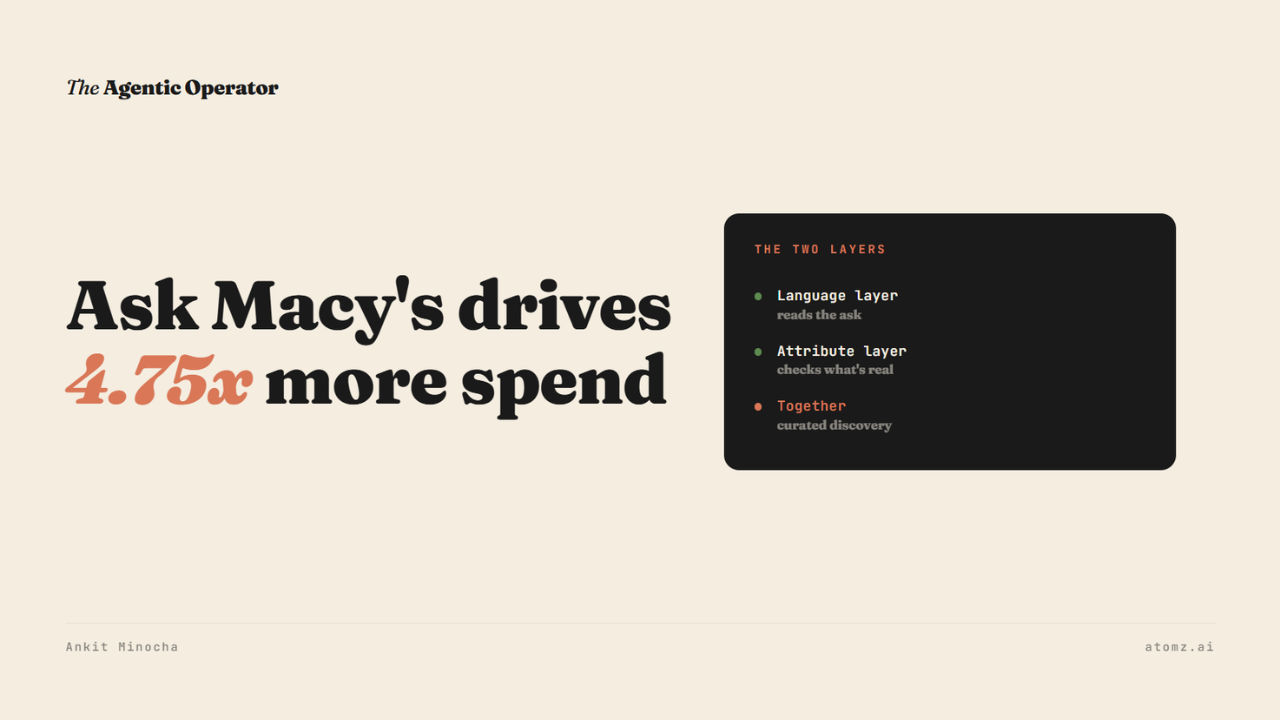
Macy's says shoppers who use their AI shopping assistant (Ask Macy’s) spend 4.75 times more per visit than shoppers who don't.
Retailers are making it easy for shoppers to find what they want. Walmart built Sparky. So did Amazon, adding an automatic-buying feature to Rufus. Ralph Lauren, a brand with no retail-tech history, ended up building an AI-powered assistant.
The reason is the same across all of them. A shopper describes what they want - inside agents like ChatGPT or Perplexity never open a retailer's site to begin with, and online shopping is moving towards having this as an on-site experience.
Max Magni, the company's chief customer and digital officer, put it this way. He said: "It's not about search… it's about curated discovery."

Source: Macy’s website
So I wanted to see what that takes, so I tried it myself.
Things I tested on Ask Macy’s
I typed "black boots" first, the kind of thing that would normally go straight into a search bar. Boots came back, priced and in stock.

Then, without me asking, it followed up with a question of its own: ankle booties or tall riding boots, and whether heel height or material mattered - plus, it showed suggested chips as clickable options that would turn into a follow-up message in the chat, making the experience as easy as it could be for anyone browsing through their catalog.
Next one was closer to how a person shops today, looking for specific products - "need a dress for a spring wedding in Miami under $150."

Every option within the budget, and the reasoning behind the picks matched the ask, breathable fabric, lighter patterns, cuts suited to a warm outdoor wedding.
Then I tried being a little vague. "A work bag that isn't too big and goes with everything." Nothing in that sentence names a size or category and it still came back with mid-sized, versatile bags, explained in those same terms.

None of what I typed was a product name. A budget, an occasion, a rough sense of size and style. That's closer to what's genuinely in a shopper's head, and it will rarely survive if it gets typed into a search box with a vector-based search.
How a sentence turns into a shortlist
Two layers are doing the work here, and they do different jobs.
The first layer reads the sentence. Macy's assistant runs on Gemini to do that part, pulling specs from a natural language query. The part that makes it feel like talking to someone.
The second layer is what makes the answer hold up. Every product behind the scenes carries structured attributes like occasion, size and material stored the same way.
Once the first layer knows what's being asked, it checks that against the second layer to build the shortlist. That's the only reason for "under $150" to show the right products.
Neither layer can exist on its own. An assistant that understands a request perfectly still has to guess if nothing underneath is structured enough to check against. A catalog full of clean attributes still leaves a shopper doing the translating themselves if nothing on top can read a real sentence. Ask Macy's works because Macy's built both.
What's in your control
A Shopify store can run on the same two layers.
Atomz's AI Assistant reads a prompt or question the way Macy's does and checks it against structured attributes already written into the catalog.
The difference is what it takes to get there. Macy's took weeks to build this. Atomz's AI Assistant goes live on a Shopify store in a few clicks.
Run the catalog audit - and see how complete your catalog is right now.
It is the same catalog that off-site agents like ChatGPT and Gemini depend on while recommending merchants and products from the Shopify Catalog API.
Get in touch for a walkthrough of how Atomz can help with discoverability.
- Ankit
If this was useful, the next one will be too.
Weekly. Free.
Unsubscribe with one click.
