What AI shopping assistants run on
Ulta, Amazon, and Walmart's AI assistants
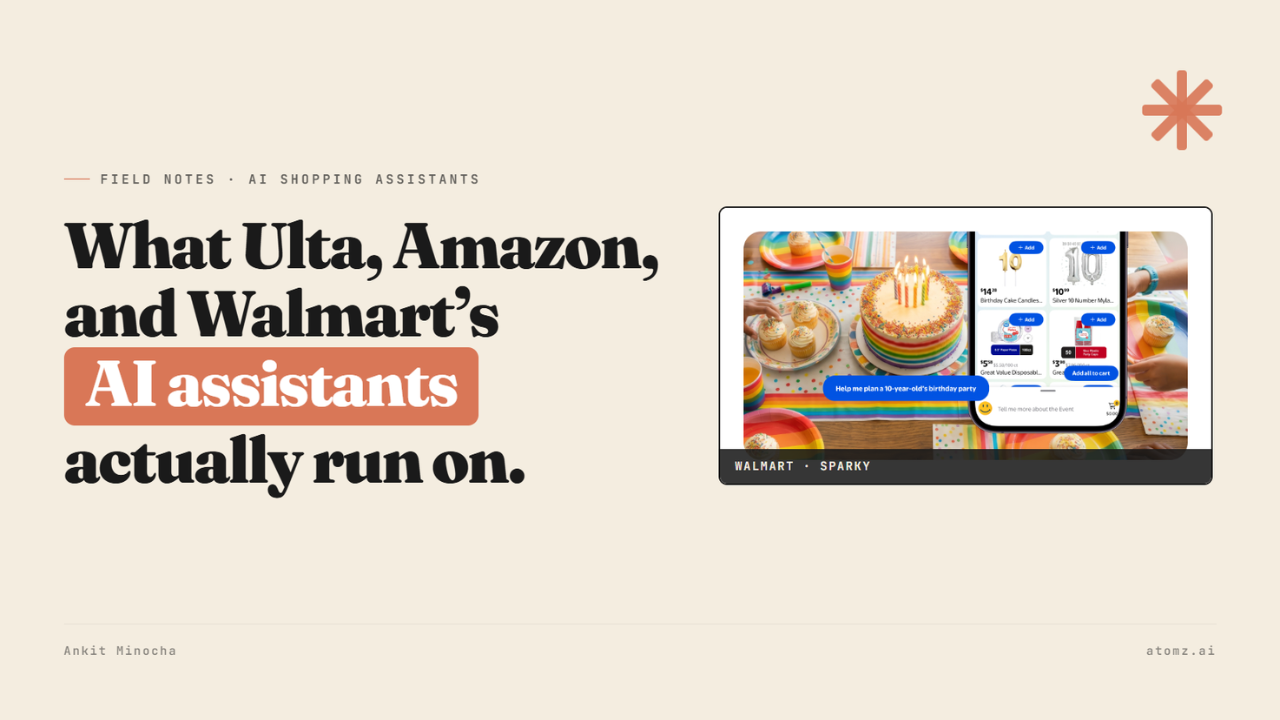
Shopping used to mean filtering through options yourself. Now it means describing the problem and letting the brand sort it out.
I spent some time in Ulta Beauty's AI assistant → see it here.
The real test was pushing past the easy question. Asking Ulta AI for something like a moisturizer for dry, sensitive skin, under $25 - brought back a few solid picks.
Added one word (fragrance-free) and the entire result set changed - products carrying "Fragrance Free" right in the product title.
Whether that's a dedicated attribute field or Ulta AI matching the words in front of it, the lesson holds either way - that the words (or natural language query) a shopper would actually type need to live somewhere the system can read them.

Source: Ulta
Precision is still catching up. The same query returned a product ranging $16.99 - $29.99. That's likely a range-matching gap - a constraint like "under $25" needs to mean the whole product, not just its cheapest variant.
Other retailers, the same infrastructure bet
Ulta isn't alone in this.
Amazon retired Rufus on May 13 and folded it into Alexa for Shopping, which also sits inside the same search bar shoppers already use.

Source: Amazon
Walmart's Sparky posted weekly active users up more than 100% quarter over quarter on its last earnings call, with AOV still running about 35% higher for shoppers who use it.
Two weeks after that, Amazon did something that undercuts any argument that this only works at a scale: it started selling the technology behind Alexa to other retailers.
Retailers can now build their own version on their own storefront, keeping their own customer data and catalog. Amazon's own reasoning is that retailers already know their own products, customers, and categories better than any general-purpose AI could.
Three companies, different platforms and the same underlying build:
→ A catalog with structured attributes attached
→ A record of who's asking and what they've done before
→ Pricing and inventory accurate to the minute
Skip any one and the assistant either guesses, stalls, or returns something irrelevant.
The gap is narrower on Shopify than it was for Amazon or Walmart
Inventory and pricing already update in real time on Shopify. That's the platform, not a project you'd need to build. The one piece that isn't automatic is a catalog with attributes filled in consistently enough for an assistant to filter on (instead of guessing).
That's the same gap AI assistants are quietly running into. It's not commonly the assistant that's under-built, but the catalog underneath it.
What Atomz's AI Assistant actually does
Atomz puts the same mechanism on your own store.
A shopper types a question the way they'd ask someone on the floor, and the AI assistant answers from your structured Shopify catalog instead of a generic script.
Paired with AI Search, on-site search stops depending on exact keyword matches.
"Something for dry, flaky skin“ returns real results because the attributes behind those products say dry skin - the same mechanism that made Ulta's fragrance-free filter work, once ‘fragrance-free’ existed somewhere for the AI to read.
Atomz's catalog enrichment is what makes that possible - filling in the product attributes, categories, and fields an assistant needs to filter on, so AI Search and AI Assistant have real structured data to read from instead of guessing.
Try for free on your own store: atomz.ai/discover
- Ankit
If this was useful, the next one will be too.
Weekly. Free.
Unsubscribe with one click.
