Why we built an AI Shopping Assistant
Product Q&A, blog citations, policy answers - and what changes by category.
Amazon says shoppers who talk to Rufus, now folded into Alexa for Shopping, before buying are 60 percent more likely to complete the purchase.
Walmart's Sparky users carry a basket 35% bigger than shoppers who skip it.
Zalando's assistant went from 6 million users to 10 million in one quarter.
The logic underneath all of it is simple.
Shoppers want to describe what they're looking for and end up buying.
Last month, I went through five big retailers, including Home Depot, Walmart, Amazon - all making the same bet in different ways. Check it out here →
We didn't start from scratch
When we started building the assistant, we were already ahead of the curve because of our goal of building a complete Agent OS for Shopify merchants.
Our Catalog Genius read and enriched the data layer and AI Search was able to turn natural language queries into a semantic match instead of a keyword lookup.

What we were missing was a conversation layer on top of it. So a shopper could type the question rather than guess at which filters or pages to check.
‘Search’ expects the shopper to know the right product.
An AI shopping assistant just has to be asked.
What our AI assistant answers today
In the last few months, we have made major progress.
You can ask it about a product and the answer comes from the same enriched catalog data Catalog Genius built for the store - including the AI-written description, the category metafields, and whatever's structured on that listing.

The suggested questions work the same way. They're built from that specific product's own data, like category, color, material, occasion, fit.
And it's not limited to a product page. You customize it the way you want.
Type in what you're looking for and the AI searches the catalog, coming back with actual product cards instead of just describing the one item in front of you.

The AI reads more. It automatically pulls from a store's blog posts and also reads policies and FAQs, so a question about a return window gets answered directly.
Reads differently by category
Not every brand needs the same questions answered.
Footwear runs on fit and construction. For a popular shoe brand that recently went live with the AI assistant, the first questions were things like whether there's cushioning in the sole or whether a shoe works for a flat foot.
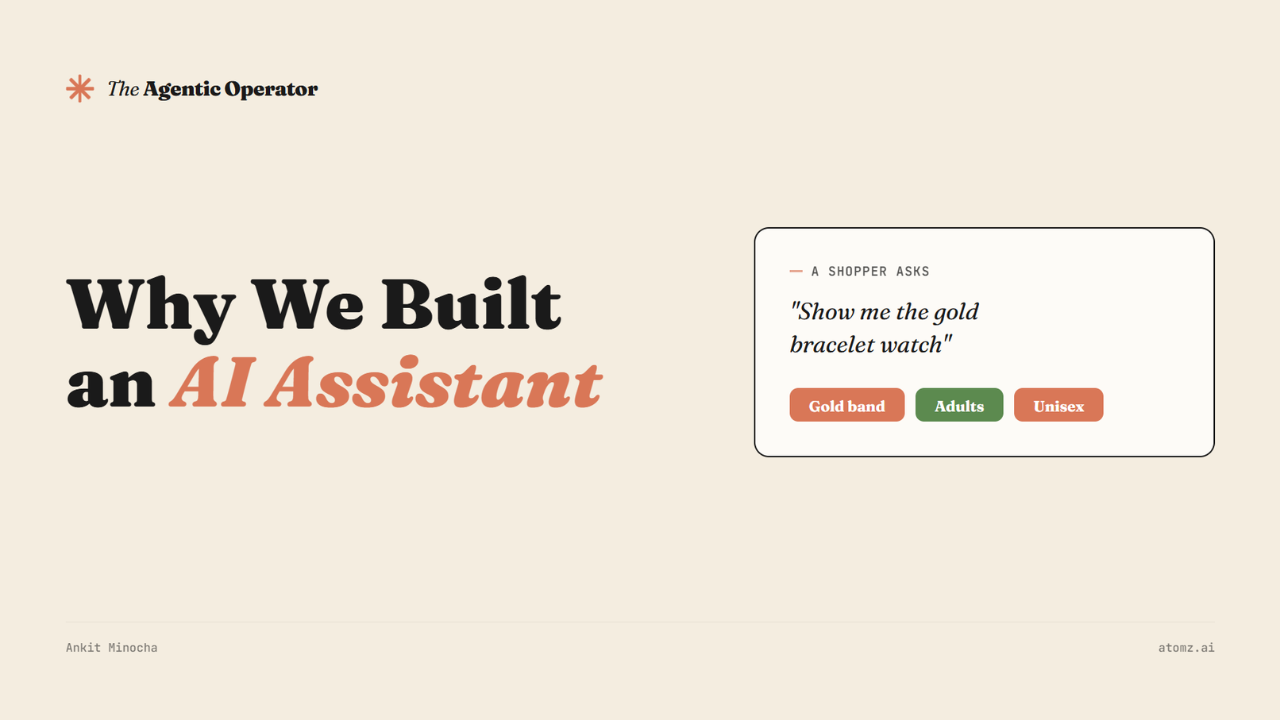
A jewelry shopper cares about band material, stone type, and movement. Ask "the gold bracelet watch" and it comes back filtered with the best match.

Skin type and fragrance matter more than most things in beauty. The ingredient shopper is trying to avoid or find needs to show up as a searchable field - not buried in text.
Furniture and home goods come down to color, dimensions, and material. A question like whether something fits in a small bedroom only works if the measurements live at a place where the assistant can read them.
Different category, same underlying question: what's structured for the agent to read.
Run the free audit first - it checks the same structured fields your Atomz AI assistant and agent shoppers like ChatGPT and Gemini read from.
- Ankit
If this was useful, the next one will be too.
Weekly. Free.
Unsubscribe with one click.
