ChatGPT now labels what each product is best for
and what it builds the label from
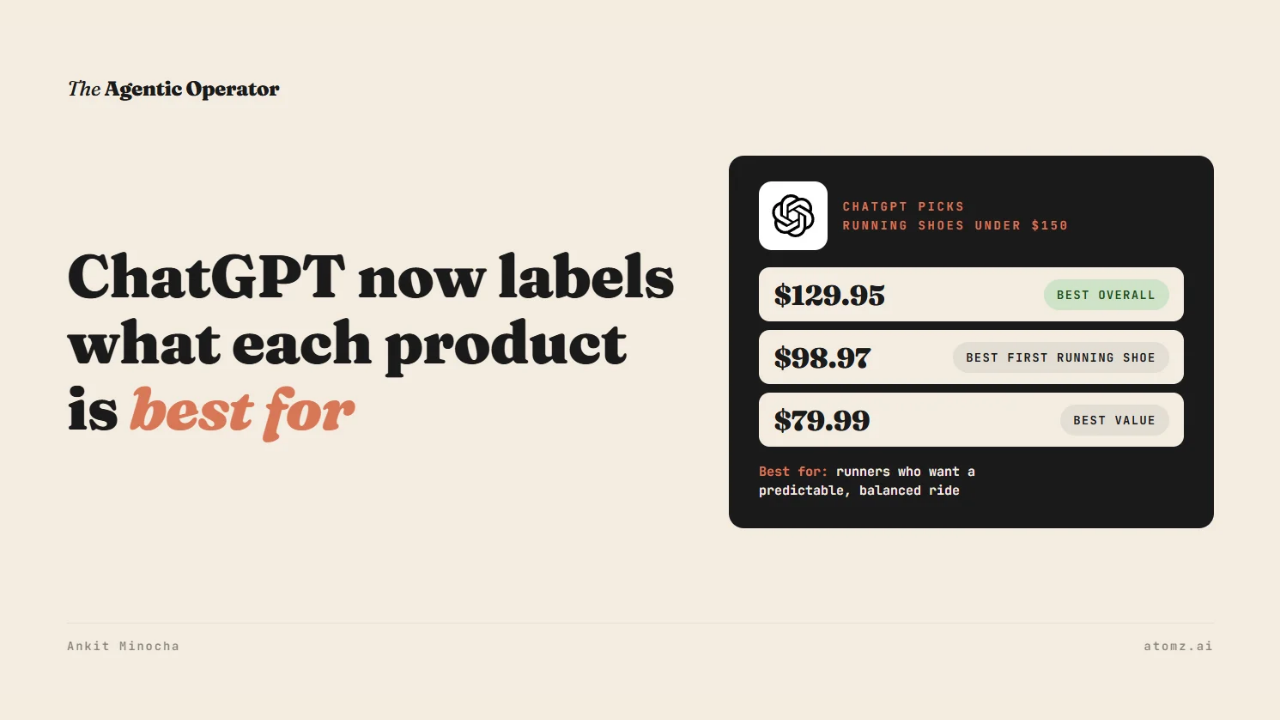
ChatGPT now tells shoppers what each product is best for. It can also lay the picks out side by side for the shopper to compare.
Three changes landed this month.
Labels - ChatGPT is testing a green "best all-rounder" label on one product, with gray labels like "best cushioning" on the others
Comparisons - GPT-6 started rolling out in ChatGPT on October 7 and reached free users a day later. Answers can include buttons, forms and charts. OpenAI says a comparison might work best side by side
Try on and Favorites - shoppers can see clothes on their own photo and save products to a Library in ChatGPT
YouTube is testing a similar format. Its AI search can show creator review videos in a comparison table.
A few months back, I shared how ChatGPT turns what reviewers say into comparison columns. Now the picks come with labels too.
What a shopper sees
I asked ChatGPT which running shoes to buy for a first half marathon, under $150.
It picked four. Three of them got labels, "Best overall for fun, cushioned miles", "Best first running shoe" and "Best value". Each pick also got a "Best for" line, like "runners who want a predictable, balanced ride".

Then it asked whether I have wide feet, flat feet or any knee or foot discomfort. I said I have wide feet.
It cut the list to two shoes from the first four and put the width in each name, a New Balance 880 Wide and a Brooks Ghost 17 Extra Wide.

Below them, it added a short form to narrow things further. It asked where I need the most room and whether my feet roll inward when I run.

I ran a cookware test too, asking for the best non-toxic cookware set under $400.
Each pick listed its key specs under the price, like "Fully clad tri-ply stainless steel" and "Induction compatible and suitable for acidic foods".
The first one got a green "My top pick" label.

Another run of the same question laid the materials out side by side in a table, with columns for synthetic coating and the main trade-off.

Where the labels come from
OpenAI's help page says ChatGPT writes these labels itself. It builds them from the information it has, which can include third-party data.
The labels aren't guarantees. OpenAI's example is that a "Budget-friendly" label might mean reviewers often mention good value.
To pick products, ChatGPT reads structured product data like price and description. For Shopify stores, that data reaches ChatGPT through Shopify Catalog with nothing to set up.
More picks come from that product data than before.
One tracking study found feed-sourced picks jumped from 8% to 62% of the product recommendations it tracked on July 10.
Across that shift, the number of different stores named fell by more than a fifth. The data was collected before GPT-6.
In the shoe test, the descriptions cited review sites and publications. When I said I have wide feet, both shoes it kept came back as wide versions.
Big retailers start ahead
A study of about 460,000 AI shopping answers looked at which stores ChatGPT and Google's AI recommend. A point-of-sale company paid for it.
Without web search, the AI named a national chain 63-70% of the time and a small or local store about 10% of the time
Given one large store and one small store, it picked the larger one 90-94% of the time
When the shopper named a specific product, small stores' share of top picks fell from about a third to about 10%
Adding the word "independent" to the prompt more than doubled the share of small stores named.
My cookware test showed both sides. Three of the four picks were sold by Walmart or Lowe's. The top pick was sold by the brand itself, Goldilocks.
My read is that the label gives a smaller brand a way in. Each label or spec line is about one thing, like value, wide feet or tri-ply steel. The product that states that thing clearly, in its data and in its reviews, has something for ChatGPT to quote.
Four checks to do
1/ Ask ChatGPT for your category the way a shopper would, with a budget. Note which label each pick gets and who ChatGPT says it suits.
2/ When ChatGPT asks follow-up questions or shows a form, answer the way your best customer would. Write down the attributes it asks about, like width, cushioning or material.
3/ Open your top five products in Shopify. Check that each of those attributes is set as a product option or a filled category metafield.
4/ Say who each product is for in plain text on the product page, like "for wide feet" or "PFAS-free ceramic". Then ask about that one attribute in your review request email.
The Shopify Catalog audit shows what an AI agent reads from your catalog and how you compare with competitors for the same shopper queries. Audit now →
Atomz AI fills in category attributes across your catalog, so the products ChatGPT compares carry the details shoppers ask about. Get in touch for a demo.
- Ankit
If this was useful, the next one will be too.
Weekly. Free.
Unsubscribe with one click.
